Artificial Life in Music
Introduction
For a brief description of what artificial life (ALife) is, click here. I keep a running, open list of visual artists and musicians who engage with ALife here.
The following is my idiosyncratic overview with some personal observations that may prove wrong as I continue my research and acquaintance with the artists involved. My focus is aimed at live performance in light of my current research project, which is to assemble ALife systems for musical performance. This page is a work in progress. Corrections are welcome.
Historical Overview
Wu, Qu and Zhang [1] open their 2024 survey of ALife in the visual arts with the observation that hybrid human-animal imagery found in the fourth-century-BC Chinese text Classic of Mountains and Seas, as well as the Chauvet cave paintings, reflect ALife art's deepest pre-histories and timeless fascination with hybrid, imagined life. We can only speculate whether music accompanied any activities revolving around these masterworks.
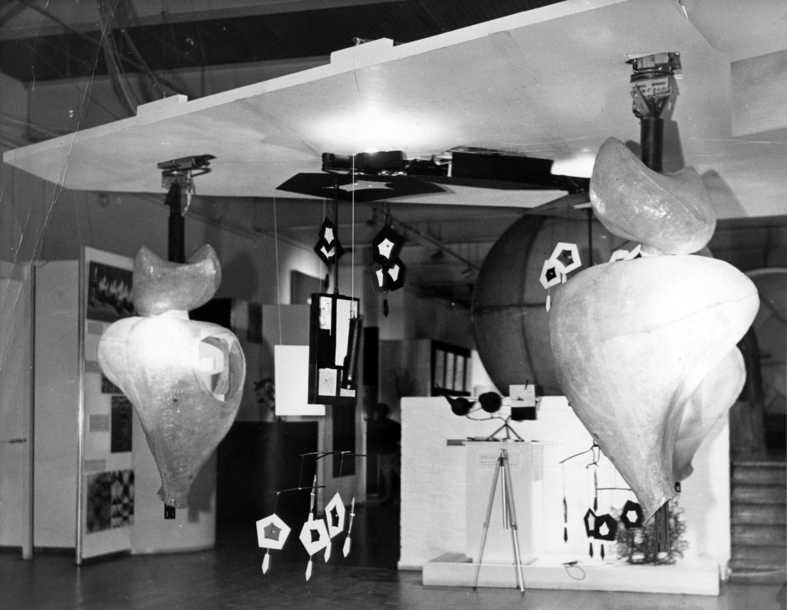
In modern times, the intersection of ALife and music has its roots in the creative technologies of the mid 20th century - namely the ideas of feedback, homeostasis, and self-replication associated with the cybernetics of Norbert Wiener and Gordon Pask. Musical examples from this time (1950s) are Pask's Musicolour – an adaptive light-show system that listened to a live musician and translated features of the sound into changing patterns of colored light [24], and his "ear" that assembled itself – threads of metal in a dish of chemical solution that could learn to distinguish between two different sound frequencies [25]. A seminal moment was the Cybernetic Serendipity exhibition in 1968, which highlighted early technology-driven creativity [1-4]. These developments gave artists a vocabulary for machines that behaved rather than merely operated.
By the late 1980s and early 1990s, ALife in the arts reached its stride, leading to a "breeder" era where a number of artists (visual as well as sonic) used Evolutionary Algorithms (EA) and Genetic Algorithms (GA) to "evolve" aesthetic objects [5, 3, 1, 9].
Examples of techniques and music from this time include:
- Cellular Automata (CA): Eduardo Miranda’s CAMUS (1993) system utilized two-dimensional CAs to generate musical passages, mapping the states of living and dead cells to interval-based musical parameters [6, 7, 8]. His Chaosynth (ca. 2001) further applied CAs to control granular synthesis [8, 7, 9].
- Genetic Algorithms: Early systems such as Al Biles’s GenJam and the Vox Populi (dates??) system adopted evolutionary metaphors to "breed" jazz solos and chord sequences through iterative selection [6, 7].
- Extra-Musical Sonification: Toshio Iwai’s Music Insects (1992) offered an early archetype of "musifying" simple agent behaviors as they traversed a virtual landscape [6].
By the early 2000s, the focus shifted toward "artificial cultures" and "sonic ecosystems" [2, 10, 11]. Projects such as Jon McCormack’s Eden modeled populations of agents where sound served vital social functions, such as mate attraction or territory defense [1, 6, 12 - 14].
Some Important Contributions
Here are several key musicians and researchers who have shaped the contemporary discourse on ALife music:
- Jack Armitage and Thor Magnusson introduce Tölvera (2024), a Python library designed for composing "basal agencies" [16, 17]. Their research also emphasizes "agential scores," treating the musical score as an active, self-organizing entity that performers identify with and attune to in real-time [16, 17].
- Eduardo Miranda utilized ALife as a tool for "computational musicology," investigating the cultural conventions and origins of musical taste [10, 7]. His work with"PhyBox: a biocomputerthat uses four biomemristors to generate music interactively" involved Physarum polycephalum, providing an example of combining wet ALife with live performance. This resulted in the work Biocomputer Rhythms (2016?) for piano and percussion[15].
- Jon McCormack explores emergent complexity and "autopoietic" dynamics in works like Eden (2004 - 2012), where virtual agents evolve sound-making behaviors based on the presence and interest of an audience, effectively creating a habitat out of the gallery space [10, 14, 12, 13].
- Alice Eldridge advocates for "simple adaptive systems" (2008) that exhibit goal-directed behavior, bridging the gap between ALife and live improvisation by allowing musicians to "play with synthetic critters" on stage [9, 1].
- Oliver Bown and Geraint Wiggins critique the "individualist" approach of early ALife music (2007), advocating for a "strong" ALife music that exists within networked, socio-cultural environments where humans and software agents act as equal partners [18].
Hiatus ca. 2008 - 2023
It seems to me that after this 2007 paper of Bown and Wiggins and Alice Eldrige's 2008 thesis, there was a relative hiatus in the mention of ALife music until the 2020's, at least in the Anglo-European discursive spaces. In other global spaces, Takashi Ikegami's University of Tokyo laboratory sustained a continuous, and increasingly performance-oriented, line of ALife-driven music and performance work throughout this time. VIDA [23], a Spanish foundation with a funding category dedicated to Ibero-American artists, supported many artists. Some of these artists, for example, Paula Gaetano Adi and Gustavo Crembil, proposed theoretical frameworks for ALife-inspired robotics markedly different from the cybernetics-and-complexity-science vocabulary. Instead, their work featured a deliberately hybrid, 'mestizo' technology that cannibalises and recombines colonial and indigenous materials and myths. Hong Kong University of Science and Technology's Guangzhou campus also had institutional funding for seminars on ALife, AI and art [1]. I am wondering what happened to ALife music in the Anglo-European scene from 2008 - 2023?
Note that the picture in the Anglo-European scene at this time is one of comparative scarcity rather than total absence. Individual researchers continued to publish ALife-related music and sound work through the decade, and indeed, this hiatus perhaps only reflects part of a renaming trend to other terms such as ecosystemic, performance ecosystem, neocybernetic, and feedback musicianship. Examples are Eldridge and Kiefer's [11] synthetic acoustic ecology research, Jonathan Impett and Leonardo Impett's [19] work on sonification and performance space, and Miranda's continuing research program, which extended into biological substrates entirely, composing with living biomemristors [15]. However, these were isolated contributions by established researchers rather than evidence of the kind of expanding, multi-author community. I have been unable to find an edited survey, dedicated conference strand, or emerging cohort of new practitioners in the record between approximately 2012 and 2023.
The Performative Turn
At first, live musical performances didn't seem to play a big role in ALife-inspired music [6, 9]. Early systems were predominantly designed as aid-to-composition tools for generating experiments or as static, reactive gallery installations [6, 9]. Complete compositions or live performances based on these systems were initially rare [6].
However, there has been an increase in the frequency of performers and composer/performers becoming involved, largely driven by the NIME (New Interfaces for Musical Expression) and "live algorithms" communities [9, 16, 18]. This "performative turn" treats ALife-inspired systems not as a background process, but as a live ensemble member or partner [19, 20, 18].
Examples of this live implementation include:
- Jack Armitage - Motherbird (2023): A trio for augmented flute, electronics, and ALife murmuration patterns [16].
- Marco Donarumma - FerroNeural (2023): A duo where a human performer with magnetic controllers negotiates agency with a virtual "slime flock" [16].
- Adam Pultz Melbye - FAAB (feedback-actuated augmented bass) (2023 and earlier): a neocybernetic approach to a machine learning-assisted feedback contrabass [26].
- Johnny DiBlasi-432Hz (ca. 2021): A generative soundscape performance where the act of training a neural network is treated as a live, evolving element [20 pp 235ff].
- Jonathan Impett - Metatrumpet/Wavespace Performance (ca. 2013): A "situated sound" implementation involving a "metatrumpet". The performer interacts with a population of wave-emitting and wave-listening agents in a multi-leveled structural emergence [19].
- Alice Eldridge - Fond Punctions (ca. 2008): A series of live "collaborative man-machine improvisations" for cello and a self-regulating homeostatic network. Eldridge feeds live acoustic samples into a granular synthesis engine controlled by the unpredictable state dynamics of an Ashbian homeostat [9].
Conclusion
From what I have been able to glean, ALife music has gone from a being a composer's helper into a framework for distributed agency and enactive interaction [19, 9]. It does seem that the trend of ALife music lies in "more-than-human" performance ecosystems that have playful exchanges between data/algorithm, agent, and performer [20 pp 181 ff, 16, 17]. As a performer, I can identify several challenges to bring Alife concepts into live performance, such as the aspect of time (we don't have funding for a billion years to test open-ended evolution) and the challenge of producing purely audio works.
Although a number of practitioners discussed above described their own work in terms other than ALife music, I will keep it here for this blog and my own future creations for several reasons: 1) it shares the name of a rapidly flourishing scientific field with an established arts tradition 2) there is also a flourishing community within that field, and a call from within that field for more translational research, and 3) this is a practice that is becoming teachable, and is increasingly encountered by students and practitioners as a named field with its own tools, communities and curricula. Therefore, it needs a name that those newcomers can find.
My blog entries will address these subjects, challenges, and histories in more detail.
Sources Used
1 Wu, Zi-Wei, Huamin Qu, and Kang Zhang. “A Survey of Recent Practice of Artificial Life in Visual Art.” Artificial Life 30, no. 1 (2024): 106–35. https://doi.org/10.1162/artl_a_00433.
2 McCormack, Jon. “The Evolution of Sonic Ecosystems.” In Artificial Life Models in Software, edited by Maciej Komosinski and Andrew Adamatzky. Springer London, 2009. https://doi.org/10.1007/978-1-84882-285-6_13.
3 Penny, Simon "Artificial Life" in Ryan, Marie-Laure, Lori Emerson, and Benjamin J. Robertson, eds. The Johns Hopkins Guide to Digital Media. Johns Hopkins University Press, 2014.
4 Prophet, Jane. “Sublime Ecologies and Artistic Endeavors: Artificial Life and Interactivity in the Online Project ‘TechnoSphere.’” Leonardo 29 (January 1996): 339. https://doi.org/10.2307/1576397.
5 Wu, Zi-Wei. “Alter Nature: Exploring Life in Computational Art.” PhD Thesis, Hong Kong University of Science and Technology (Hong Kong), 2025. Abstract on ALife Conceptions
6 Todd, P., and E. R. Miranda. “Putting Some (Artificial) Life into Models of Musical Creativity.” In Musical Creativity, 0 ed., edited by Irène Deliège and Geraint A. Wiggins. Psychology Press, 2006. https://doi.org/10.4324/9780203088111.
7 Coutinho, Eduardo, Marcelo Gimenes, Joao M. Martins, and Eduardo R. Miranda. “Computational Musicology: An Artificial Life Approach.” 2005 Purtuguese Conference on Artificial Intelligence, December 2005, 85–93. https://doi.org/10.1109/EPIA.2005.341270.
8 Miranda, Eduardo. Evolving Cellular Automata Music: From Sound Synthesis to Composition. January 6, 2003.
9 Eldridge, Alice. “Collaborating with the Behaving Machine: Simple Adaptive Dynamical Systems for Generative and Interactive Music.” n.d.
10 Miranda, Eduardo. Towards an Artificial Life Approach to the Origins of Music. 2004. https://api.semanticscholar.org/CorpusID:210706309.
11 Eldridge, Alice, and Chris Kiefer. “Toward a Synthetic Acoustic Ecology: Sonically Situated, Evolutionary Agent Based Models of the Acoustic Niche Hypothesis.” July 1, 2018, 296–303. https://doi.org/10.1162/isal_a_00059.
12 Whitelaw, Mitchell. Metacreation: Art and Artificial Life. MIT Press, 2004.
13 Barrett, Lloyd. Sound Creatures and the Virtual Soundscape. n.d. References on McCormack
14 McCormack, Jon, and Camilo Cruz Gambardella. “Complexity and Aesthetics in Generative and Evolutionary Art.” Genetic Programming and Evolvable Machines 23, no. 4 (2022): 535–56. https://doi.org/10.1007/s10710-022-09429-9. References on Sonic Ecosystems
15 Miranda, Eduardo Reck, Edward Braund, and Satvik Venkatesh. “Composing with Biomemristors: Is Biocomputing the New Technology of Computer Music?” Computer Music Journal 42, no. 3 (2018): 28–46. https://doi.org/10.1162/comj_a_00469. Author note on CMJ publication
16 Armitage, Jack, Victor Shepardson, and Thor Magnusson. Tölvera: Composing With Basal Agencies. October 8, 2024. https://doi.org/10.5281/ZENODO.13904854. Introduction to Tölvera
17 Armitage, Jack, Miguel Crozzoli, and Daniel Jones. “Artificial Life in Integrated Interactive Sonification and Visualisation: Initial Experiments with a Python-Based Workflow.” Proceedings of the 29th International Conference on Auditory Display (ICAD2024), June 2024, 18–25. https://doi.org/10.21785/icad2024.003. Conclusion on Synthetic Behavior
18 Bown, Oliver, and Geraint Wiggins. “On the Meaning of Life (in Artificial Life Approaches to Music).” Proceedings of the 4th International Joint Workshop on Computational Creativity 65 (2007). Strong ALife Music
19 Impett, Jonathan, and Leonardo Impett. “The Perception of Potential: Interference, Dimensionality and Knowledge.” Advances in Artificial Life, ECAL 2013, September 2, 2013, 1126–31. https://doi.org/10.7551/978-0-262-31709-2-ch170.
20 Vear, Craig, and Fabrizio Poltronieri, eds. The Language of Creative AI: Practices, Aesthetics and Structures. Springer Series on Cultural Computing. Springer International Publishing, 2022. https://doi.org/10.1007/978-3-031-10960-7.
21 Trillo, Roberto Alonso, and Marek Poliks, eds. Choreomata: Performance and Performativity after AI. 1st ed. Chapman and Hall/CRC, 2023. https://doi.org/10.1201/9781003312338.
22 Huang-Kokina, Alexandra. “Creative Artificial Intelligence for Music Theatre: AI Mediation and Artificial–Human Co-Creativity in Contemporary Science-Fiction Opera.” Performance Research 29, no. 6 (2024): 145–52. https://doi.org/10.1080/13528165.2024.2537573.
23 Tenhaaf, N. "Art embodies A-Life: The VIDA competition." Leonardo, 41(1), 6-15. https://doi.org/10.1162/leon.2008.41.1.6
24 Pask, G. (1971) "A comment, a case history and a plan", in Reichardt, J. (ed.) Cybernetics, Art and Ideas. London: Studio Vista, pp. 76–99.
25 Cariani, P. (1993) 'To evolve an ear: epistemological implications of Gordon Pask's electrochemical devices', Systems Research, 10(3), pp. 19–33.
26 Melbye, A. P. (2023) A Continually Receding Horizon: Making, Performing, and Improvising with Semi-Autonomous Double Bass Feedback Instruments. PhD thesis, Queen's University Belfast.